Journals

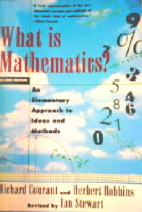
Naming Infinity by Loren Graham and Jean-Michel Kantor

This may not be a timely commentary, but I only recently read the book Naming Infinity (Harvard University Press 2009). It was a gift from my husband who rightly expected that I would be interested in a book purported to be about how mathematicians were supported through a conceptual crisis by the bold work of believers in the mystical tradition of name worship.  The authors can never fully display the correspondence between the belief in name worshipping and the mathematics itself, but they do successfully tell the story of the way the religious, emotional, mathematical and political lives of a group of Russian mathematicians converged.  This is certainly a story worth telling.  The passion and devotion we are often lead to see in stories about artists or saints is seen here in these mathematicians’ lives.  Just this glimpse of their dedication is enough to tell us that something more is happening in mathematics than mere problem solving.

There have been a number of disputes among mathematicians, particularly through the late 19th century and early 20th centuries, about which math ideas were legitimate and which ones should not be allowed in the discipline.  Interestingly enough, along with set theory notions and characterizations of the infinite, there was even objection to discontinuous functions.  Reading the different positions in these arguments shows us something about the nature of mathematics itself and the intellectual and psychological struggles it can create.  This particular book highlights an important question, namely - what does it mean for a mathematical object to exist?   How does naming something contribute to or even produce its existence?   These are beautiful questions and the answers are not obvious.  I hope to continue to discuss them in upcoming blogs.

The Grahm/Kantor book does a very nice job of revealing history that will surprise us and it brings us into the world of some Russian mathematicians we may know little about.

Moving The Mind’s Eyes

Advances in neurobiological research often demonstrate how very difficult it is for us to get a good look at ourselves. Effective analytic tools in the sciences usually rely on defined categories such as organic and inorganic; animals and plants; protons, neutrons and electrons; voluntary action versus involuntary action; motor skills versus thinking skills. But refinements in our analytic efforts often require redefining the very categories they have created. The famous particle/wave duality of light is a perfect example.

A recent article about a particular brain structure contributed to my fascination with how thought-governed lives emerge from the basic aspects of our biology that we share with so many creatures. The article is called Seeing Without Looking: Brain Structure Crucial for Moving the Mind’s Spotlight. It summarizes findings reported in a December issue of Nature. It considers the relationship between looking at something with your eyes and paying attention to something with, for lack of a better word, your mind.

The brain structure in question is called the superior colliculus. Its function has been understood to be the motor control of head and eye movement, i.e. sending motor control commands to eye and neck muscles. But experiments at the Salk Institute for Biological Studies indicate that the superior colliculus is equally involved when you move your attention away from the thing you may be looking at. And the institute, it seems, has been paying attention to the superior colliculus for some time. Another study was reported on in September 2008.

This one observed what happens when we track what researchers called “the invisible center” of a moving object. The invisible center of something is like an airplane whose presence at night can only inferred from peripheral lights, say on its wings. Since the superior colliculus contains a topographic map of the visual space around us, it mirrors geographic space, and it is possible to identify neurons that correspond to the spot in this space where our eyes would focus (named the foveal location). The studies confirmed that neurons in the foveal location are active even when the object of their attention was invisible, like the dark airplane. The eyes seem to be pointing to the invisible part of the image.

In February 2009, researchers at Salk also found that the superior colliculus controls microsaccades, those quick tiny eye-movements necessary to keep visual images from fading and that appear to be random.   But according to Richard Krauzlis, an associate professor in the Salk laboratory “…results show that the neural circuit for generating microsaccades is essentially the same as that for voluntary eye movements. This implies that they are caused by the minute fluctuations in how the brain represents where you want to look.” (emphasis mine). It was demonstrated that even if we avert our eyes away from an object that gets our attention, the direction of microsaccades will be biased toward that object.

These observations suggest an interesting link between our eyes and the more general action of just paying attention to something and thus also indicate some overlap of reflexive (automatic) action and thoughtful (deliberative) behavior. Voluntary and involuntary movements share neurons. It was also noted in the December 2009 article, (again quoting Richard Krauzlis) “… results show that deciding what to attend to and what to ignore is not just accomplished with the neocortex and thalamus, but also depends on phylogenetically older structures in the brainstem.”

When a brain structure that seems built to move eye and neck muscles is also found active in moving our attention, purely mindful attention becomes linked to sight. That the eyes will lock on an invisible object suggests that something of the visual brain will respond to internal stimuli. And finding that neural circuits for what appear to be reflexive eye movement, namely microsaccades, are essentially the same as the ones for voluntary movement, suggests that distinguishing between voluntary and involuntary is not so easy given that microsaccades happen completely outside of our awareness.

Each of these studies focusses on a detail that would seem to have no affect on how we see ourselves. But they contribute to the steady progress neuruoscientists are making as they try to unravel what the brain is doing. This unraveling often leads to novel considerations like Semir Zeki’s idea that the visual arts are an extension of the function of the visual brain (August 2009 post).

The body is built to be in its world, to see it and move through it and use it. Our elaborate conceptual structures built with language, reason, mathematics and all of our scientific efforts are inevitably grounded in fundamental biological actions and may be motivated by more than our awareness can discern. It is entirely reasonable to consider that we can never fully understand what we’re doing or why.

The Body’s Thoughts

It has been understood for some time that metaphor provides a sensory anchor to abstract ideas.  But, more recently, cognitive psychologists have looked at how active the role of metaphor may be in thinking.  In a recent article on Boston.com, experiments are cited which explore the extent to which metaphor shapes thought.

The article cites studies where subjects were given a cup of hot or cold coffee to hold, without being told that it was part of the study and, a few minutes later, they were asked to characterize a person that was described to them.  The subjects were more likely to find that person to be caring, generous, or good-natured if they were holding a warm coffee than if they were holding an iced one.  In another study, participants were less likely to describe a social situation as having gone smoothly if they had handled some sandpaper covered puzzle pieces.  It all sounds a bit unreasonable, but that may just be because we underestimate the extent to which our thoughts rise out of our bodies.

The article also refers to two books by George Lakoff and Mark Johnson which have metaphor as the very root of thought (instead of what we might otherwise think, which is that the metaphor develops to clarify the thought).  Lakoff uses this idea to do a cognitive study of mathematics in his book Where Mathematics Comes From, where even the most sophisticated mathematical concepts are understood to be grounded in sensation.

It’s difficult to grapple with the notion that the body someow leads in the building of ideas or that we are never fully aware of the source of our thoughts.  But I have long thought it clear that the obscurity of mathematics’ source and its surprising breadth of understanding is a signal that we don’t completely understand how thoughts happen or what they may be accomplishing.  Results in mathematics are often unanticipated and it frequently happens that a concept finds application long after it was developed.  Giving the body its due may help dampen our inclination to be smug about what is known, or correct the complicated conflicts produced by certainties evidenced by social division and injustice.

The Brain Patterns of Numbers

Now we can identify the number the brain is identifying!

An article in Science News reports on how neuroscientists are able to determine the quantity of dots a person is looking at by looking at their brain activity patterns using an MRI. The study also revealed that the patterns that correspond to some number of dots, and the ones that correspond to the same number represented by a digit, were related but not the same. Computer analyses used to evaluate the patterns showed their relationship.

An interesting detail of the study’s findings was that an individual’s signature pattern for the digits could be used to determine the number of dots that person saw, but their signature pattern for the dots could not be used to determine what digit they had viewed.   If the source of the digit pattern is the dot pattern, it would be easier to trace back to the originating dot pattern than it would to predict a digit pattern’s variation from that dot pattern.  The researchers suggested that this was evidence that the brain’s action with respect to the non-symbolic quantities is, in some way, stronger. The patterns in brain activity when dots are viewed are more distinct and invariant.

Stanislas Dehaene is well known for his work on the neurological foundations of number and arithmetic and he is one of the authors of the paper in Current Biology on which this article is based. He has also found that non-symbolic quantities have a spatial aspect where larger numbers are associated with movement to the right and smaller ones with movement to the left. All of this suggests to me that our symbolic representations in mathematics are tied tightly to things the brain is already wired to do, albeit mathematics may be making significantly different use of it.

Zeki, The Brain, and The Art of Abstraction

My introduction to Semir Zeki came in 1992 with a special issue of Scientific American called Mind And Brain. I still have the magazine with the lines I highlighted. I was excited when I read it. Something new was happening. Here are some of the passages I marked:

“The past two decades have brought neurologists many marvelous discoveries about the visual brain. Moreover, they have led to a powerful conceptual change in our view of what the visual brain does…. It is no longer possible to divide the process of seeing from that of understanding as neurologists once imagined, nor is it possible to separate the acquisition of visual knowledge from consciousness.” (Italics are mine)

Zeki concludes that, when seeing and understanding are viewed as one process, “our inquiry into the visual brain takes us into the very heart of humanity’s inquiry into its own nature.”

Since then, Zeki has written extensively, in books and papers, on how a neurobiological understanding of vision contributes to our understanding of artistic creativity. In so doing he pulls the curtain back and gives us a new way to self-reflect. Much of what he writes has impacted how I think about the emergence of mathematics. He convincingly argues that the visual arts can be seen as an extension of the brain’s visual processes and this helps me imagine mathematics as an extension (or at least a reflection) of neurological processes designed to manage perception and thought.

In an essay on artistic creativity and its relationship to visual processes, (Science Magazine, 2001), he ventures even further. Our brain, he explains, is the most variable, (in the Darwinian sense) and therefore the fastest evolving organ we have. While we don’t know the source of its variability, all manner of creative work is an expression of it. Zeki speculates that this variation is also the source of problematic deviant behavior. He believes that neurological studies of art and aesthetics (which he calls neuroesthetics) can help us understand what determines variability in general. Such studies would shed light on the common neural ground that makes it possible for us to appreciate a work of art. I would not be surprised if they also told us something about how we come to recognize the beauty of an equation.

He wrote chapter 2 of the book Neurology of the Arts, edited by F. Clifford Rose. The title of the chapter is Neural Concept Formation and Art: Dante, Michelangelo, Wagner. In it he focuses on the work of three particular figures in our history. But it also contains a good outline of how Zeki ties creative work to biological processes. He explains that abstraction is an essential characteristic “imposed upon the brain by one of its chief functions, namely the acquisition of knowledge.” Looking for the essence of things by using abstraction is what the brain is built to do. This looking for the essence, he argues, is what creative work is about.

How does the brain abstract? This is only partially known and Zeki gives us some examples. There are specialized brain cells that respond preferentially to straight lines at a particular angle. About a particular one of these he says, “The cell, in brief, abstracts for verticality, without being concerned about what is vertical” There are cells that synthesize multiple views of an object into a ‘view-invariant’ image. And there are also cells specialized to respond to particular colors or to motion in a particular direction. These are some of the attributes of retinal impressions that get sent to specialized regions in the brain and are used to construct what we see.

In both pieces, he explains that in its search for generalities, the brain inevitably creates the ideal from the particulars. Once formed, the ideal cannot be found in the world of particulars. This dissatisfaction with all particulars, or this frustration with the material that can never contain the ideal, is what Zeki believes caused Michelangelo to leave work unfinished. The book chapter more fully explores the impact of ideals on our experience, even with regard to love.

It’s hard to talk about ideals without Plato coming to mind. And there are many references to Plato in Zeki’s chapter. But neurobiologists seem to think that Plato didn’t quite have it right. For Plato, the ideal had an independent existence. For neurobiologists, it is an inevitable consequence of the brain’s working on the particulars. What I find striking is that, for both, the particulars are subordinated to the ideal. And Plato’s reverence for the ideals may have been born of an intuitive sense that they are the source of all knowledge, the fundamentally necessary ingredient, outside of our awareness, needed to shape the acquisition of knowledge.

Galileo’s Perspective

photo0425rot903Our family lived in France for the last six months and at the end of that time we had the chance to visit family in Florence. Since we drove to Florence we could stop at Pisa along the way.  I found Galileo all around me.

Dava Sobel’s book, Galileo’s Daughter, once drew me in and brought new life to the story of the physicist who was right and the Church that condemned him. Galileo had a daughter who loved him, wrote to him after his arrest, and she was a nun. The book makes us privy to this very human, albeit extraordinary, story.  And it locates his home while under house arrest in Florence not far from the convent. We got the address, set out to find it and we did. When you visit such places, you try to get as close as you can to the lives you can’t touch, or the time outside your reach – to see something of the story’s three-dimensional reality.


IL Gioiello of Galileo

IL Gioiello of Galileo

Galileo’s life in these cities is even more highlighted at the moment because August marks the 400th anniversary of his first telescope observations. We mostly imagine him as a physicist, but it was mathematics that captured his attention and was his profession. His affinity for mathematics is likely some consequence of the way he was poised to see. He is quoted as having said, “Where the senses fail us, reason must step in.” When we can’t see our way through something, we can shift our attention inward and reason our way through it. Reason builds on what the senses perceive, by opening a path and directing us when we can’t just watch where we’re going.


Looking closely at the abstract, this experimentalist had an insight about the notion of infinitely many things that foreshadowed work to come some 250 years later. In his book Two New Sciences, a conversation between Simplicio and Salviati (the Galileo character) outlines what is now called Galileo’s paradox – that there are the same number of perfect squares as there are whole numbers despite the fact that not every whole number is a perfect square. When Salviati describes the situation to Simplicio, he hints at the notion of one-to-one correspondence which will be invoked for the first time in 1874 by Georg Cantor. Salviati concludes that the attributes equal, greater or less do not apply to the infinite. When presented with lines of different lengths, Salviati tells us that it cannot be said that one line has more or less points than the other but simply that they both have an infinite number of them.

I imagine Galileo breathing in the fresh air of the Renaissance and breathing out ideas of the future. His role in our history seems an inevitable consequence of his nature, of the way he watched and reasoned. And he lived in a time when Western Europe may have been looking inward instead of just outward, across mysterious seas, to extend their reach or to move their horizon.

Galileo used what artists then understood about perspective to confirm that the spots he saw on the sun were, in fact, spots and not, as had been argued, other planetary spheres in front of the sun. He could see that their shape changed when viewed from different angles because they became foreshortened in precisely the way the mathematics of perspective required. And the word perspective is from the Latin perspicere, to see clearly.

photo0472zoomGalileo’s work is his perception of the world, very directly and it makes sense that we often use the telescope, the mechanical extension of sight, to symbolize his effectiveness. The sense that he was a vital individual, who was just looking, is captured in the legend that his thoughts on pendulum motion began during a service in the Pisa Cathedral. A swinging lamp caught his attention and he timed its swings with the beat of his pulse. His body was his clock.

A good look at Galileo renders a very human, natural view of science and mathematics. And I think he says it best with this:  “In my opinion, nothing occurs contrary to nature except the impossible, and that never occurs.”

Quoting Poincare

I hope to use this blog to find new things to see about mathematics.  And this might even have some effect on how we see ourselves. I want to start with something Henri Poincare said. Poincare was an intellectual heavyweight, a mathematician, theoretical physicist, and philosopher. He was the last person to be able to know all of the mathematics that existed in his lifetime. And he made some nice remarks about mathematics and science, a bit unusual in their use of nature images. I’ve chosen to begin with this one because it led me to thoughts that contribute to this blog’s perspective:

“Though the source be obscure, still the stream flows on.”

There are no easy answers to questions about what mathematics is or where it’s coming from. But it may be that its source is obscure because we’re so close to it or, more to the point, because we’re embedded in it. Looking for it would be like looking for the source of all that we see when we open our eyes, which is very close to trying to find the source of our awareness.

I have come to think of mathematics as akin to vision. For us, seeing begins when light hits all of the material around us and makes some impression on the retina, which is built precisely to receive it. The brain then needs to piece bits of stimuli together, like movement, color, and form. Some visual theorists will go so far as to say that the brain invents the image we see. It searches out the essence of things so that, for instance, no matter how a speaker might be moving his hands in gesture, a hand is a hand is a hand.  So vision has no single source. The source of what we see is, all at once, the light, the material it hits, and eye and brain tissue.

In mathematics, some of what the mind is piecing together may be the things we’ve seen, the ways we’ve reasoned, our experiences of time and distance, and pure products of our imagination. We take the contour of things we see, like the sun and the moon, and in our memory and imagination we find the circle. From two trees, two fingers, and two dogs…we form quantity and the number two. Some fundamental aspect of reason builds ‘if this then not that’ statements.

Perhaps mathematics inherited from vision the purpose of finding the essence of things. But it defines essence or equivalence and exploits it, creating extraordinary generalizations. Although it can be completely removed from the physical world, mathematics is somehow stretching what the body is made to do. And the brain keeps building structure, interlocking different parts of our experience and our thought, and finding things like analytic geometry or the derivative.

Poincare was an intuitionist meaning that he believed mathematics was grounded in intuition rather than logic. And he must be right. Logic just wouldn’t be enough. Why nature provides us the abilities that our mathematics reflects is the real mystery. Just like the question, why it has provided us eyes.